

Dear Colleagues,
It is my greatest pleasure, on behalf of the Organizing Committee to welcome you to attend the 3rd Central & Eastern Europe Nuclear Power Congress 2016, which will be held on Nov 28-29, 2016, in Warsaw, Poland.
3rd Central & Eastern Europe Nuclear Power Congress 2016 is the only event focusing on nuclear new build and lifetime extension in CEE region.
Poland’s government strongly supports nuclear power development. It plans to build 6.0 GW nuclear capacities (two nuclear power plants) by 2035. Nuclear expected to take 19% of energy mix by 2035, and 45-60% by 2050.
Finland has four nuclear reactors (2741 net MW) providing nearly 30% of its electricity. The fifth reactor (1600 net MW) is under construction. Another reactor (1150 net MW) is in planning stage. Finland has already gotten 20-year license extension for the operating nuclear reactors.
There are six nuclear reactors in Czech Republic, totally 3904 net MW, generating about one-third of its electricity. Czech plans to build 2400 MW by 2035, and 3600 MW by 2040. CEZ is applying for ten-year licence extensions for Dukovany 1-4 reactors over 2015-2017, and further extension to 60 years is under consideration.
In Slovakia, four nuclear reactors with 1816 net MW generating half of its electricity, two more reactors with 942 net MW under construction. The government plans to build two nuclear reactors with 2400 MW in the next decade. SE is planning to extend the licences of the two Bohunice V2 units to 60 years (2045) or build 1200 MW of new nuclear capacity at Kecerovce.
Ukraine has 15 nuclear reactors, with 13107 net MW in total, generating about half of its electricity. The government plans to maintain nuclear share (about 50%) in electricity production to 2030. Energoatom expects nuclear to retain its contribution of 50-52% of Ukraine's electricity in 2020, it wants to extent all the existing NPPs’ lifetime.
Bulgaria has two nuclear reactors, with 1926 net MW generating about one-third of its electricity. It has signed deal with Russia’s Rusatom Service and Bulgaria’s Risk Engineering, to extend lifetime of Kozloduy 6 up to 60 years. Construction of a new nuclear plant was planned, but instead, a 1200 net MW unit will be added to the present plant.
Four nuclear reactors in Hungary with 1889 net MW, generating more than one-third of its electricity. Nuclear proportion of electricity is expected to about 60%. Hungary government is targeting 6000 MW of new generating capacity by 2030. 20-year lifetime extension of Paks 1&2 has been approved, and Paks 3&4 are waiting for approval.
Romania already has two nuclear reactors, with 1310 net MW, generating almost 20 percent of its electricity. It plans to build two more nuclear plants (1440 MW) by 2020, and refurbish Cernavoda 1among 2020-2023, and Cernavoda 2 during 2030-2037.
Two nuclear power plants (2388 MW) in Belarus are under construction.
Lithuania is planning a 1350 MW nuclear power plant.
Therefore, for those who are keen to find new opportunities or strengthen their presence in the CEE market, especially the Poland, Finland, Czech Republic, Slovakia and Ukraine, this two-day congress will certainly cater to your needs.
Looking forward to meeting you in Warsaw!
Best regards,
Organizing Committee of 3rd Central & Eastern Europe Nuclear Power Congress 2016
Day One Morning
Day One Afternoon
Day Two Morning
Day Two Afternoon
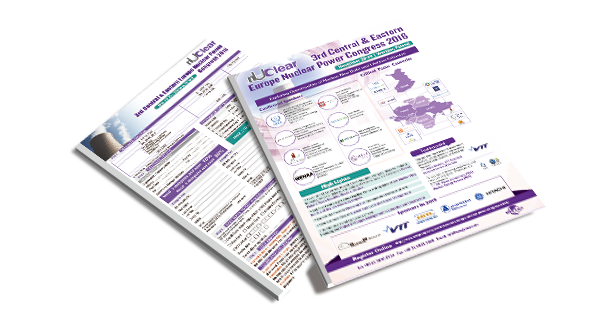
In the event brochure, you will know the 2-day conference this year will more focus on the progress of Central and Eastern Europe nuclear projects.